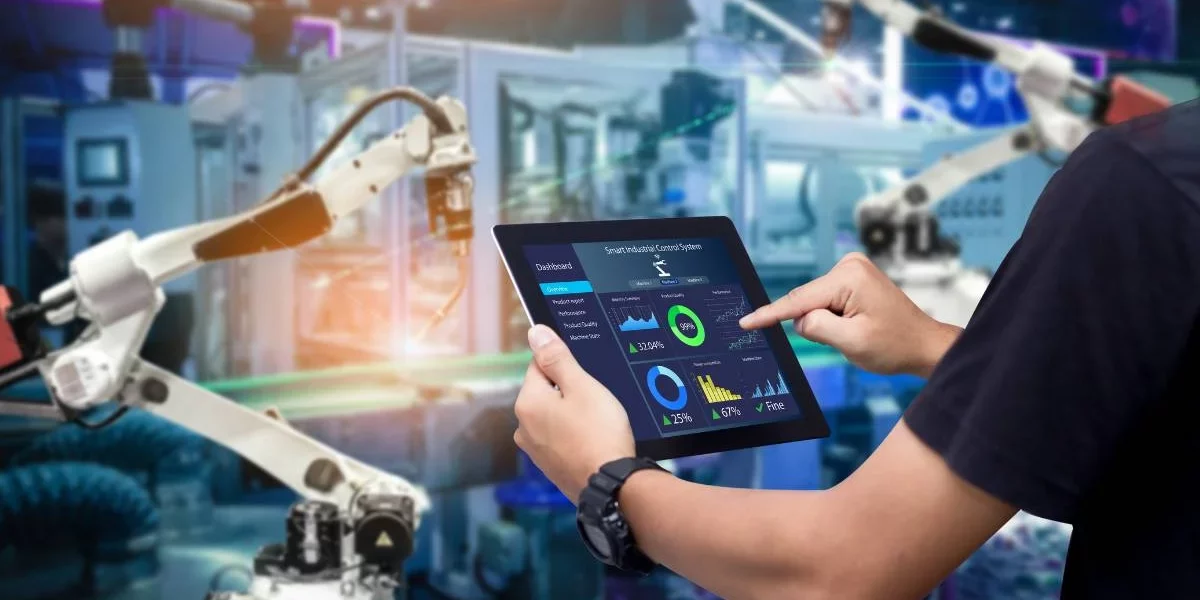
We are in the midst of the Fourth Industrial Revolution—Industry 4.0, and it’s transforming the manufacturing landscape like never before. Building on the foundation of the previous industrial revolutions, Industry 4.0 integrates advanced digital technologies into every facet of production, enabling smarter, more efficient, and highly connected operations.
What is Industry 4.0?
Industry 4.0 refers to the convergence of cyber-physical systems, Internet of Things (IoT), big data, cloud computing, and artificial intelligence to create intelligent manufacturing environments.
Core technologies include:
- Industrial IoT (IIoT)
- Artificial Intelligence & Machine Learning
- Smart Sensors
- Robotics & Automation
- Augmented Reality (AR)
- 5G Connectivity
- Additive Manufacturing (3D Printing)
- Digital Twins
- Advanced Analytics
Key Impacts of Industry 4.0 on Manufacturing
1. Increased Operational Efficiency
Real-time monitoring and smart automation allow for optimized processes, reduced downtime, and minimized waste. Plants can respond instantly to process deviations and fine-tune operations on the fly.
2. Enhanced Product Quality
With AI-powered quality control, manufacturers can detect defects early in the production cycle and ensure consistent output. Digital traceability also improves compliance and accountability.
3. Predictive Maintenance
Industry 4.0 enables predictive analytics that detect wear and tear before it leads to equipment failure—drastically reducing unplanned downtime and maintenance costs.
4. Greater Customization and Flexibility
Smart factories can switch between product types quickly, supporting mass customization without compromising efficiency.
5. Data-Driven Decision Making
Big data and advanced analytics provide actionable insights across operations, from inventory to production to customer demand—enabling faster and smarter business decisions.
6. Improved Supply Chain Integration
Connected systems offer end-to-end visibility, enabling real-time tracking, risk mitigation, and seamless collaboration with suppliers and distributors.
7. Workforce Transformation
While automation takes over repetitive tasks, Industry 4.0 creates demand for new skills—in areas like data science, digital engineering, and robotics—shifting workers to more strategic and creative roles.
Challenges of Adopting Industry 4.0
- Legacy Infrastructure: Many plants still rely on older equipment not built for connectivity.
- Cybersecurity: Increased connectivity requires robust strategies to protect against data breaches and cyberattacks.
- Skills Gap: The need for a digitally skilled workforce is outpacing the availability of talent.
- Initial Investment: Digital transformation requires capital and a long-term mindset.
Real-World Results
Companies that have embraced Industry 4.0 have seen:
- 20–30% increases in productivity
- Up to 50% reductions in maintenance costs
- 15–25% improvements in manufacturing lead times
- Significantly lower defect rates and better customer satisfaction